Stafford
Stafford is an emblematic English name. It means: the ford ( gué,
gué,  vado) by the wharf, in memory of its land offering an anchor point by the river Sow.

Beyond the city itself, which is what this page is about, and giving rise to one shire, this is also the street in Wolverhampton where we live (at n°182) and the University, where we work, was founded as the technical institute of Wolverhampton and Staffordshire. Now Wulfruna's city is disconnected from this shire and is part of the West Midlands instead.
Gallery
We visited the city on 30 July (2017). This was a Sunday, so churches and the Ancient High Houses remained closed to us. Still this didn't leave us time to see everything we could have (including the mill).
-
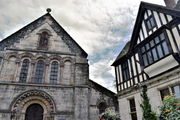 Stafford's architecture is typical of the area.
 -
![This timber house (the Ancient High House) is the largest remaining timber framed town house in England [1].](/images/thumb/c/cd/Stafford-30June2017-2.jpg/180px-Stafford-30June2017-2.jpg) This timber house (the Ancient High House) is the largest remaining timber framed town house in England [1].
This timber house (the Ancient High House) is the largest remaining timber framed town house in England [1]. -
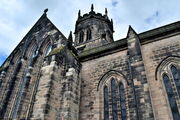 The Collegiate Church of Saint Mary, the sister church of Wolverhampton's collegiate (Saint Peter).
 -
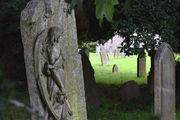 A gloomy look at the others.
 -
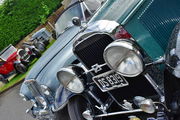 On the day of our visit, there was a display (and competition) of old cars.
 -
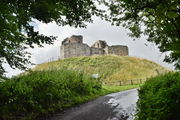 Stafford castle.
 -
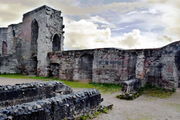 Now in ruins.
 -
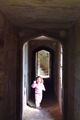 It used to be an important Saxon site, maybe one home to Æthelflæd.
 -
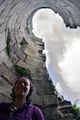 Its fate has not always been very happy and its uncertain standing even made it believed to have been meant as a folly, the worst outrage you can make to a castle.
 -
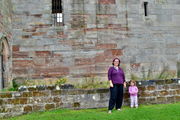 It is, nowadays, only of decorative purpose.
 -
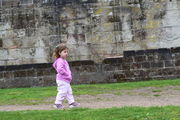 But it is a great place for a walk in the stunning Staffordshire countryside.
 -
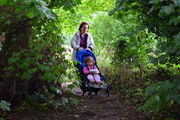 Even the path that links it to the city, two miles away, is a beautiful stroll.

![This timber house (the Ancient High House) is the largest remaining timber framed town house in England [1].](/wiki/File:Stafford-30June2017-2.jpg)


